


Gemstones have been valued for centuries for their beauty, colours, and unique properties. From the rich red colour of rubies to the calming blue shades of aquamarine, each stone has its own appeal. But not all gemstones fall into the same category.
The terms precious and semi-precious gemstones are commonly used to classify different types of stones. Diamonds, rubies, sapphires, and emeralds are traditionally known as precious gemstones, while amethyst, garnet, topaz, and peridot are generally classified as semi-precious gemstones.
The difference between precious and semi-precious gemstones is not just about price. Their rarity, colour, clarity, durability, and overall quality also influence their value. A high-quality semi-precious gemstone can sometimes be more valuable than a lower-quality precious stone.
Understanding precious vs semi precious gemstones can help you compare different stones and make a better choice when buying gemstone jewellery. Whether you want a gemstone for its appearance, personal preference, or astrological significance, knowing the basics can help you choose the right one.
Gemstone weights are often quoted in different units. Use our converter to switch between carat and ratti instantly and avoid costly mistakes.
What Are Precious Gemstones?
Precious gemstones are traditionally valued for their beauty, rarity, and quality. The four main types are diamond, ruby, blue sapphire, and emerald. These stones are widely used in fine jewellery and are known for their attractive colours and lasting appeal.
Each gemstone has its own qualities. Diamonds are known for their brilliance, rubies for their rich red colour, blue sapphires for their deep blue shades, and emeralds for their beautiful green colour.
The value of precious gemstones depends on factors such as colour, clarity, cut, carat weight, origin, and treatment. A high-quality natural gemstone can be more valuable than a stone with lower quality, even if both belong to the same category.
What Are Semi-Precious Gemstones?
Semi-precious gemstones are stones valued for their colours, patterns, and natural beauty. Popular examples include amethyst, garnet, peridot, aquamarine, citrine, and turquoise. These gemstones are used in rings, pendants, bracelets, and other jewellery.
Each semi-precious gemstone has its own appearance and characteristics. Amethyst is known for its purple colour, garnet for its deep red shades, peridot for its green colour, and aquamarine for its light blue tones. Their different colours make them suitable for various jewellery styles and personal preferences.
The price of semi-precious gemstones depends on their quality, rarity, colour, clarity, and size. Some rare or high-quality stones can be quite valuable. The term semi-precious does not mean a gemstone is less beautiful or always less expensive than a precious gemstone.
The Historical Importance of Gemstones
Gemstones have held an important place in human history for thousands of years. Ancient civilisations used them in royal jewellery, religious objects, and decorative items. Many people also believed that certain stones brought good luck, protection, and prosperity.
Precious gemstones like rubies, emeralds, and sapphires were often worn by kings and queens as symbols of wealth and power. Semi-precious stones such as turquoise, amethyst, and garnet were also valued for their beauty and cultural significance.
Over time, gemstones became popular for jewellery, personal adornment, and astrological purposes. Today, both precious and semi-precious gemstones continue to hold value because of their appearance, cultural importance, and individual qualities.
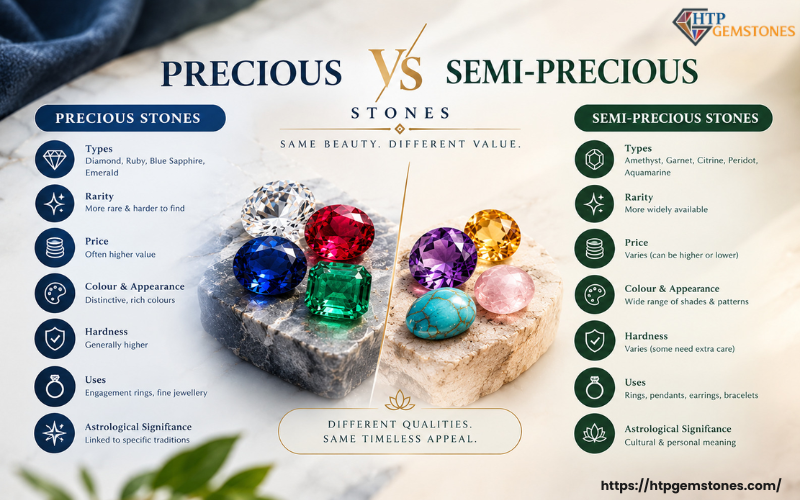
Precious vs Semi-Precious Stones: Key Differences
Precious and semi-precious gemstones differ in their traditional classification, appearance, rarity, and market value. Both types are used in jewellery, but their individual qualities can vary from one stone to another. Understanding these differences can help you choose a gemstone that suits your needs and budget.
1. Types of Gemstones
Precious gemstones traditionally include diamonds, rubies, blue sapphires, and emeralds. Semi-precious gemstones include amethyst, garnet, citrine, peridot, and aquamarine. Each type offers different colours, patterns, and natural characteristics.
2. Rarity and Availability
Some precious gemstones are rare, especially those with exceptional colour, clarity, and quality. Semi-precious gemstones are available in a wider range of varieties, although certain types can also be rare and difficult to find.
3. Price and Value
Precious gemstones often command higher prices, but this is not always the case. The value of any gemstone depends on its quality, carat weight, colour, clarity, origin, and treatment. A rare, high-quality semi-precious gemstone can sometimes cost more than a lower-quality precious stone.
4. Colour and Appearance
Precious gemstones are known for their distinctive colours, such as the red of ruby, green of emerald, and blue of sapphire. Semi-precious gemstones offer a broader range of shades, from purple amethyst and green peridot to blue aquamarine. Both categories have unique visual qualities.
5. Hardness and Durability
Gemstone hardness affects how well a stone resists scratches. Diamond is the hardest natural gemstone, while ruby and sapphire are also highly durable. Semi-precious gemstones have different levels of hardness, so some require more care when worn regularly. For example, amethyst is suitable for many types of jewellery, while softer stones may need extra protection.
6. Uses in Jewellery
Precious gemstones are commonly used in engagement rings, fine jewellery, and valuable collections. Semi-precious gemstones are popular in rings, pendants, earrings, and bracelets because of their variety of colours and styles. The best choice depends on the design, frequency of use, and personal preference.
7. Astrological and Personal Significance
Some people choose gemstones for astrological reasons, while others prefer them for their colour, beauty, or personal meaning. Blue sapphire, ruby, and emerald are associated with specific astrological traditions, and stones such as amethyst and turquoise also have cultural significance. Anyone choosing a gemstone for astrology should check the relevant tradition and buy from a reliable seller.
How to Select the Perfect Gemstone for You
The right gemstone depends on your budget, personal preference, and reason for buying it. Before making a purchase, consider the following factors to choose a gemstone that suits your needs.
1. Check the Gemstone Quality
Look at the gemstone’s colour, clarity, cut, and carat weight. These factors affect its appearance and market value. Ask the seller whether the stone is natural, treated, or synthetic before buying.
2. Consider Your Budget
Precious and semi-precious gemstones are available at different price points. Compare the quality and price of different stones to find an option that fits your budget.
3. Choose the Right Gemstone for Daily Wear
If you plan to wear the gemstone every day, consider its hardness and durability. Diamonds, rubies, and sapphires are suitable for regular wear, while softer gemstones may require extra care.
4. Check the Certification
A reliable gemological certificate can provide details about a gemstone’s identity and, depending on the report, its natural or synthetic origin and treatments. Always check the certificate details and issuing laboratory before making a purchase.
5. Understand Your Purpose
Some people buy gemstones for jewellery, while others choose them for astrological beliefs or personal significance. Your purpose can help you decide which gemstone and quality are right for you.
6. Buy from a Trusted Seller
Choose a trusted seller like HTP Gemstones when buying precious or semi-precious gemstones. Compare gemstone quality and certification before making a purchase. A reliable seller can help you choose a gemstone that suits your needs and budget.
FAQ
1. Is sapphire precious or semi-precious?
Sapphire is a precious gemstone known for its durability, rich colours, and beauty.
2. Which stones are precious and semi-precious?
Diamonds, rubies, sapphires, and emeralds are traditionally precious gemstones. Amethyst, garnet, citrine, peridot, and turquoise are commonly classified as semi-precious gemstones.
3. Are semi-precious stones worth anything?
Yes, semi-precious stones have value based on their colour, clarity, rarity, size, and overall quality.
4. What are the cheapest semi-precious stones?
Common varieties of amethyst, citrine, agate, and jasper are often affordable, depending on their quality and size.
Conclusion
Precious and semi-precious gemstones are valued for their beauty, colours, and unique qualities. While diamonds, rubies, sapphires, and emeralds are traditionally classified as precious gemstones, stones like amethyst, garnet, and aquamarine are known as semi-precious gemstones.
When comparing precious vs semi precious gemstones, remember that quality, rarity, colour, and clarity all affect their value. Before buying, consider your budget and purpose, check the gemstone’s certification, and choose a trusted seller to make an informed decision.
Need Expert Guidance Before Choosing a Gemstone?
Every gemstone works differently for each person. Our experts help you choose the right stone based on suitability, purpose, and budget.
