

Green gemstones are known for their fresh colours, natural beauty, and timeless appeal. From deep green emeralds to light green peridot, these gemstones come in different shades, patterns, and levels of transparency. Each stone has its own features, making it suitable for jewellery, collections, and personal use.
There are many types of green gemstones found around the world. Some are rare and highly valuable, while others are more affordable and easy to find. Emerald, jade, green tourmaline, peridot, and green sapphire are some of the most popular examples of naturally green gemstones.
If you are interested in buying or learning about green colored gemstones, knowing their names, features, and differences can help you make a better choice. This guide covers 10 popular green gemstones, their meanings, and the key points to consider before choosing one.
Symbolism and Meaning of Green Gemstones
Green gemstones are often linked with nature, growth, peace, and good fortune. Their green colour represents freshness, balance, and new beginnings. Many people also associate these stones with prosperity, emotional strength, and positive energy.
Different green gemstones have different symbolic meanings. Emerald is often connected with love and wisdom, jade represents harmony and good luck, while peridot is associated with happiness and renewal. These beliefs have been part of gemstone traditions for many years.
Some people choose green gemstones for their traditional meanings, while others prefer them for their colour and beauty. Whether worn as a ring, pendant, bracelet, or other jewellery, green gemstones hold a special place in different cultures and personal traditions.
Gemstone weights are often quoted in different units. Use our converter to switch between carat and ratti instantly and avoid costly mistakes.
List of All the Most Popular Green Gemstones
Green gemstones are available in different shades, from soft light green to rich, deep green. Each gemstone has its own colour, appearance, hardness, and value. Some are popular for fine jewellery, while others are known for their unique patterns and natural beauty.
Here are 10 popular green gemstones you should know about.
1. Emerald
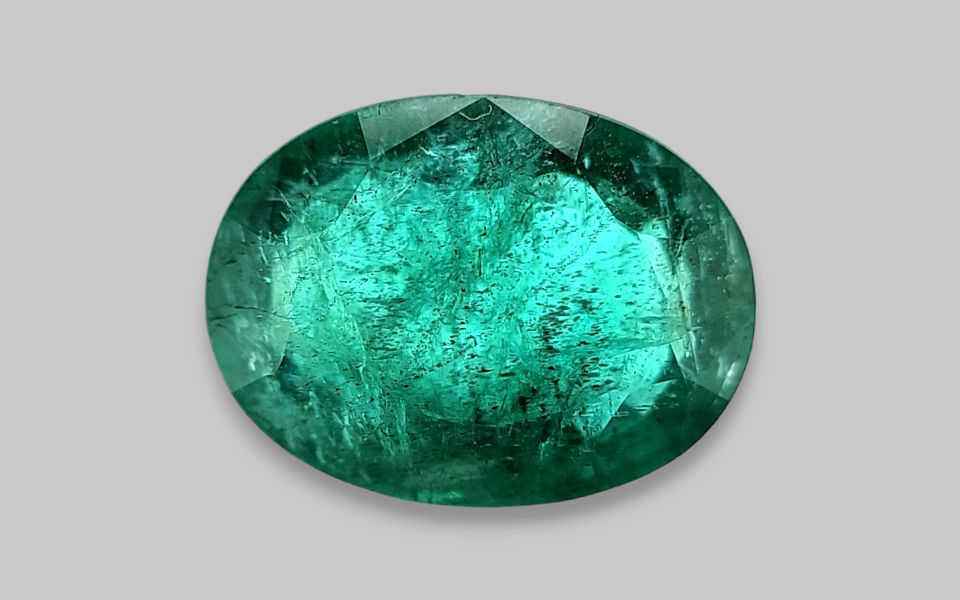
Emerald is a green variety of beryl and gets its colour mainly from chromium and vanadium. Its shades range from medium green to deep, vivid green. Colombia, Zambia, and Brazil are among the well-known sources of natural panna stone. Colombian emeralds are especially recognised for their rich green colour.
One interesting feature of emeralds is their natural internal inclusions, often called jardin, which means garden in French. These inclusions form part of the stone’s natural appearance. Emerald has a Mohs hardness of 7.5–8, although its inclusions can make it more sensitive to pressure and impact.

2. Jade
Jade is not a single mineral but a name used for two different minerals: jadeite and nephrite. Jadeite is generally rarer and can display highly valued shades of vivid green, while nephrite is commonly found in softer green tones. Myanmar is a major source of fine-quality jadeite.
The colour of jade can range from pale green and greyish green to rich emerald-like green. Its interlocking crystal structure gives it excellent toughness, which means it can resist breaking even though its hardness is lower than that of some other gemstones. This property has made jade important in carving and traditional jewellery for centuries.
3. Peridot
Peridot belongs to the olivine mineral family and is one of the few gemstones that naturally occurs in a green colour. Its shades range from yellowish green to olive green. Iron within its mineral structure is responsible for its distinctive colour.
A fascinating fact about peridot is that it has been found in meteorites, although most gem-quality stones come from Earth. Important sources include Pakistan, Myanmar, China, and the United States. Peridot has a Mohs hardness of 6.5–7, so it needs reasonable care to prevent scratches.
4. Green Tourmaline
Green tourmaline, also known as verdelite, is valued for its wide range of green shades. Its colour can vary from pale mint green to deep forest green, depending on its chemical composition. Iron and other trace elements contribute to the different colours found in this gemstone.
Unlike emerald, green tourmaline often has good transparency and can show attractive colour variations within a single crystal. Brazil, Afghanistan, Nigeria, and Mozambique are among its known sources. With a Mohs hardness of 7–7.5, it is suitable for many types of gemstone jewellery.
5. Tsavorite Garnet
Tsavorite is a rare green variety of grossular garnet. Its bright green colour comes mainly from traces of chromium and vanadium. It is especially known for its strong brilliance and can display a rich green appearance without the need for routine heat treatment.
This gemstone was first identified in Tanzania and later became closely associated with Kenya’s Tsavo region, from which its name comes. Tsavorite is generally harder than emerald, with a Mohs hardness of 7–7.5. Its rarity, attractive colour, and natural brilliance make fine-quality specimens highly desirable.
6. Demantoid Garnet
Demantoid garnet belongs to the andradite garnet variety and is famous for its exceptional brilliance. It has a higher dispersion than diamond, which means it can produce colourful flashes of light when viewed from different angles. Its colour usually ranges from yellowish green to rich green.
One of its most interesting features is the presence of fine, golden thread-like inclusions called horsetail inclusions. These are particularly associated with certain Russian demantoid garnets. The combination of rarity, brilliance, and distinctive inclusions makes demantoid one of the most interesting green gemstones for collectors.
7. Green Sapphire
Green sapphire is a variety of corundum, the same mineral family as blue sapphire and ruby. Its green shades are mainly linked to iron within the crystal structure. Some stones show a single green shade, while others display yellow-green or blue-green colour combinations.
One major advantage of green sapphire is its excellent durability. It has a Mohs hardness of 9, making it suitable for everyday jewellery, including engagement rings. Green sapphires are found in countries such as Australia, Sri Lanka, Madagascar, and Thailand.
8. Chrysoprase
Chrysoprase is a variety of chalcedony, which belongs to the quartz mineral family. Its attractive apple-green colour comes from small amounts of nickel in its structure. Unlike transparent emerald or tourmaline, chrysoprase is usually translucent to opaque and has a smooth, waxy appearance.
Australia is one of the best-known sources of fine-quality chrysoprase. The gemstone is commonly cut into rounded cabochons rather than faceted shapes to highlight its natural colour. Its Mohs hardness is around 6.5–7, making it reasonably durable with proper care.
9. Malachite
Malachite is a copper carbonate mineral that stands out because of its natural green bands and circular patterns. Its colour ranges from light green to almost blackish green, often appearing in waves, rings, or eye-like designs. These patterns develop as the mineral forms in copper-rich deposits.
Unlike many transparent gemstones, malachite is opaque and is rarely faceted. Its natural patterns are best displayed through polishing and cabochon cutting. With a Mohs hardness of 3.5–4, it is relatively soft and needs careful handling to avoid scratches and damage.
10. Green Aventurine
Green aventurine is a variety of quartz recognised by its subtle sparkling effect, known as aventurescence. This appearance comes from tiny reflective mineral inclusions, usually fuchsite mica, spread throughout the stone. Its colour ranges from pale green to medium and dark green.
Unlike highly transparent gemstones, green aventurine is usually translucent to opaque. It has a Mohs hardness of around 6.5–7 and is commonly shaped into beads, cabochons, and polished decorative pieces. India is one of the important sources of this gemstone.
How to Choose the Right Green Gemstone
The right green gemstone depends on its colour, quality, purpose, and price. Every gemstone has different features, so it is important to check a few details before making a purchase.
Look at the Colour
Green gemstones come in many shades. Emerald is known for its rich green colour, peridot has a yellowish-green appearance, and tsavorite is valued for its bright green shade. Choose a colour that matches your personal taste and preference.
Check the Hardness
The hardness of a gemstone tells you how well it can resist scratches. Green sapphire has a hardness of 9 on the Mohs scale, while emerald ranges from 7.5 to 8. Softer stones like malachite need extra care. A harder gemstone is generally a better choice for rings worn regularly.
Examine the Clarity
Natural gemstones can have small marks or inclusions inside them. Emeralds often contain visible inclusions, while some green sapphires and garnets may have a cleaner appearance. Check whether these features affect the stone’s beauty or strength before buying.
Compare the Price
The price of green gemstones depends on their colour, size, clarity, rarity, and treatment. Fine emeralds and demantoid garnets can be expensive, while green aventurine and some varieties of chrysoprase are available at lower prices. Compare similar stones to understand whether the asking price is reasonable.
Ask for a Certification
A gemstone certificate helps confirm the stone’s identity and provides details about its natural or synthetic status and any detected treatments. Always check the laboratory name and certificate details. A reliable certificate gives you more confidence when purchasing an expensive gemstone.
Consider Where You Will Wear It
Your choice should also depend on how you plan to use the gemstone. Green sapphire and green tourmaline are suitable options for regular jewellery, while malachite and chrysoprase need more careful handling. Think about your daily routine before selecting a stone.
FAQ
1. Which green gemstone is the most valuable?
Fine-quality emeralds are among the most valuable green gemstones. Their price depends on colour, clarity, carat weight, origin, and treatment. Rare demantoid garnets and fine jadeite can also command high prices.
2. Which green gemstones are naturally green?
Peridot, emerald, jade, green tourmaline, and tsavorite garnet are examples of naturally green gemstones. Their colour comes from elements present in their mineral structure.
3. How can I identify a natural green gemstone?
A gemstone’s colour and appearance alone cannot confirm whether it is natural. A certificate from a recognised gemological laboratory can help verify its identity, natural or synthetic status, and any detected treatments.
4. Which green gemstone is best for jewellery?
Emerald, green sapphire, peridot, and green tourmaline are popular choices for jewellery. The right option depends on your preferred colour, budget, and how often you plan to wear it.
Conclusion
Green gemstones come in many beautiful shades, and each stone has its own qualities, colour, and value. From the rich green of emerald and jade to the bright shades of peridot and tsavorite, there are many options to suit different tastes and budgets.
Before buying a green gemstone, check its colour, clarity, hardness, treatment details, and certification. These factors will help you choose a stone that matches your preferences and purpose. A genuine gemstone with proper certification can also give you greater confidence in your purchase.
Need Expert Guidance Before Choosing a Gemstone?
Every gemstone works differently for each person. Our experts help you choose the right stone based on suitability, purpose, and budget.
