


Jade is a popular natural gemstone known for its beauty, rich colours, and cultural importance. It is mainly found in two varieties: Jadeite and Nephrite. Although both are called jade, they have different mineral compositions, appearances, textures, and market values.
The main difference between jadeite and nephrite lies in their mineral structure and overall appearance. Jadeite is generally known for its bright colours and fine-grained texture, while nephrite is valued for its smooth feel, toughness, and traditional use in jewellery and carvings.
If you are comparing jadeite vs nephrite, understanding these differences can help you identify each variety and make a better buying decision. This guide explains their key features, colours, durability, treatments, and value so you can understand which type of jade suits your needs.
Gemstone weights are often quoted in different units. Use our converter to switch between carat and ratti instantly and avoid costly mistakes.
What is Jadeite Jade?
Jadeite is one of the two natural minerals known as jade. It is a rare gemstone valued for its rich colours, smooth texture, and attractive appearance. It is mainly found in Myanmar, which is also known as Burma and is an important source of high-quality jadeite.
Jadeite comes in different colours, including green, white, lavender, yellow, orange, and grey. Among these, vivid green jadeite is the most sought-after variety. It is often called Imperial Jade, especially when it has a rich green colour and good transparency.
Unlike many other gemstones, jadeite is valued for its colour, texture, transparency, and overall appearance rather than just its size. It is commonly used to make rings, pendants, bracelets, bangles, and other jewellery.
Jadeite is also harder than nephrite, with a hardness of around 6.5 to 7 on the Mohs scale. Its compact mineral structure gives it a distinct appearance and makes it a popular choice among gemstone collectors and jewellery buyers.
What is Nephrite Jade?
Nephrite is the second natural mineral variety of jade. It is known for its smooth texture, soft appearance, and excellent toughness. Unlike jadeite, nephrite has a fibrous mineral structure that makes it highly resistant to breaking, even though it is slightly softer.
Nephrite is commonly found in shades of green, white, cream, grey, brown, and black. One of its well-known varieties is White Nephrite, also called Mutton Fat Jade, which is valued for its creamy white colour and smooth, waxy appearance.
Nephrite has a hardness of around 6 to 6.5 on the Mohs scale. Its tightly packed, interlocking fibrous structure gives it excellent toughness, making it suitable for jewellery, ornaments, sculptures, and traditional carvings.
China, Canada, Russia, and New Zealand are some of the important sources of nephrite. The gemstone has a long history in Chinese culture, where it has been used for jewellery, decorative objects, and traditional carvings for thousands of years.
Nephrite is often compared with jadeite because both belong to the jade family. When looking at nephrite jade vs jadeite, the main differences are their mineral composition, internal structure, colour range, and market value.
Jadeite vs Nephrite: Key Differences
Jadeite and nephrite are both natural forms of jade, but they differ in several ways. Their mineral composition, internal structure, hardness, colour, and market value help distinguish one from the other.
Mineral Composition
Jadeite belongs to the pyroxene mineral group and is mainly composed of sodium aluminium silicate. Nephrite belongs to the amphibole mineral group and contains calcium, magnesium, and iron silicates.
This difference in chemical composition is one of the main reasons why both gemstones have different physical properties. It also helps gemologists identify whether a jade specimen is jadeite or nephrite.
Internal Structure
Jadeite has a granular structure made up of closely packed mineral crystals. Under magnification, these crystals may appear as small, tightly fitted grains. The size and arrangement of these grains can affect the gemstone’s texture and appearance.
Nephrite has a dense, fibrous structure in which tiny mineral fibres are tightly interwoven. This arrangement gives nephrite excellent toughness and makes it highly resistant to breaking. It is one of the reasons nephrite has been widely used for carving and jewellery for centuries.
Hardness
Jadeite has a Mohs hardness of around 6.5 to 7, while nephrite measures approximately 6 to 6.5. This means jadeite is slightly harder and offers good resistance to surface scratches.
Still, hardness is not the only factor to consider when comparing these gemstones. Nephrite may be softer, but its fibrous structure makes it extremely tough. Both varieties are suitable for jewellery when properly cut, polished, and cared for.
Colour Range
Jadeite is available in several colours, including green, lavender, white, yellow, orange, and grey. Its green varieties are especially popular, with vivid green Imperial Jade being among the most valuable. The colour can vary from light and pale shades to deep, rich tones.
Nephrite is commonly found in green, white, cream, grey, brown, and black. White nephrite, particularly the creamy variety known as Mutton Fat Jade, is highly appreciated. Compared with jadeite, nephrite generally has a softer and more uniform colour appearance.
Transparency
Transparency is another important factor in the appearance of jade. Jadeite can range from completely opaque to highly translucent. Fine-quality jadeite with good translucency allows light to pass through its surface, creating a beautiful glow that adds to its appeal.
Nephrite is generally more opaque, although some fine-quality pieces can show slight translucency. It often has a smooth, waxy or oily appearance rather than the glassier look sometimes seen in jadeite.
Toughness
Nephrite is known for its exceptional toughness because of its tightly interwoven fibrous mineral structure. These fibres help distribute impact across the stone, making it more resistant to breaking and chipping. This property makes nephrite a popular material for detailed carvings and everyday jewellery.
Jadeite is also a tough gemstone, but its granular crystal structure gives it slightly different impact resistance. Both varieties can last for many years with proper care, but nephrite generally has the advantage when it comes to toughness.
Market Value
Jadeite generally has a higher market value than nephrite, especially when it has a vivid green colour, fine texture, and good transparency. Imperial Jade is particularly sought after by collectors and jewellery buyers. Its rarity and quality can make it one of the most expensive jade varieties.
Nephrite is usually more affordable and available in a wider range of price points. Still, its value depends on colour, texture, origin, craftsmanship, and overall quality. Fine white nephrite and exceptional green varieties can also command high prices in the gemstone market.
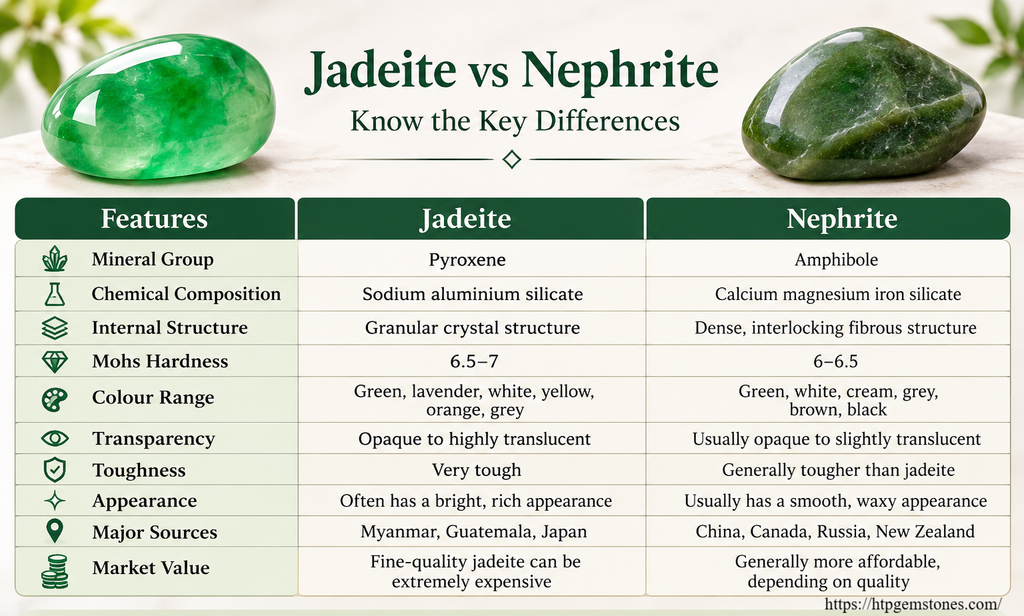
The following table explains the main differences between jadeite and nephrite to help you understand both varieties better.
| Features | Jadeite | Nephrite |
| Mineral Group | Pyroxene | Amphibole |
| Chemical Composition | Sodium aluminium silicate | Calcium magnesium iron silicate |
| Internal Structure | Granular crystal structure | Dense, interlocking fibrous structure |
| Mohs Hardness | 6.5–7 | 6–6.5 |
| Colour Range | Green, lavender, white, yellow, orange, grey | Green, white, cream, grey, brown, black |
| Transparency | Opaque to highly translucent | Usually opaque to slightly translucent |
| Toughness | Very tough | Generally tougher than jadeite |
| Appearance | Often has a bright, rich appearance | Usually has a smooth, waxy appearance |
| Major Sources | Myanmar, Guatemala, Japan | China, Canada, Russia, New Zealand |
| Market Value | Fine-quality jadeite can be extremely expensive | Generally more affordable, depending on quality |
Colour, Appearance and Transparency
Colour and appearance are two important factors that help distinguish jadeite from nephrite. Although both gemstones come in different shades of green and other colours, their overall look, texture, and transparency can differ significantly.
Colour Differences
Jadeite comes in a wide range of colours, including green, lavender, white, yellow, orange, and grey. Green jadeite is particularly popular, especially stones with a rich, even colour. Imperial Jade, with its vivid emerald-like green shade, is one of the most valuable varieties.
Nephrite is commonly found in shades of green, white, cream, grey, brown, and black. Its green colour can range from pale green to deep dark green. White nephrite, especially the creamy variety known as Mutton Fat Jade, is also highly valued for its soft and elegant appearance.
Differences in Appearance and Texture
Jadeite often has a brighter appearance and can show a glassy or slightly granular texture when polished. Its surface may look more vibrant, especially in fine-quality stones with good translucency. The texture can range from very fine to slightly coarse, depending on the quality.
Nephrite usually has a softer, waxy or oily appearance. Its tightly packed fibrous structure gives it a smooth feel when polished. It often has a more uniform look, which makes it suitable for detailed carvings, bangles, pendants, and other jewellery pieces.
Transparency Differences
Transparency plays an important role in the beauty and value of jade. Jadeite can range from opaque to highly translucent. Fine-quality jadeite allows some light to pass through, giving the stone a soft glow and making its colour appear more attractive.
Nephrite is generally more opaque, although some fine-quality pieces may show slight translucency. Its appearance is usually more solid and less glassy than jadeite. The level of transparency, along with colour and texture, helps determine the overall quality of both gemstones.
Durability and Suitability for Everyday Wear
Both jadeite and nephrite are known for their durability, which makes them suitable for different types of jewellery. They are harder and tougher than many people expect, but their ability to handle daily wear depends on their internal structure, surface hardness, and overall quality.
Is Jadeite Suitable for Everyday Wear?
Jadeite has a hardness of around 6.5 to 7 on the Mohs scale, which gives it good resistance to everyday scratches. It is commonly used in rings, pendants, earrings, and bracelets. Its attractive colours and smooth finish also make it a popular choice for regular jewellery.
Although jadeite is durable, it can still get damaged by strong impacts or accidental drops. Rings and bracelets may experience more contact with hard surfaces, so they need extra care. Proper setting and regular cleaning can help maintain their appearance for a long time.
Is Nephrite Suitable for Everyday Wear?
Nephrite has a hardness of around 6 to 6.5 on the Mohs scale, making it slightly softer than jadeite. Its biggest strength is its exceptional toughness. The tightly interwoven fibres inside the stone help it resist breaking and chipping, even when exposed to minor impacts.
This makes nephrite a good choice for bangles, bracelets, pendants, and other jewellery worn regularly. Its smooth texture and natural appearance also make it suitable for both traditional and modern designs.
Which Type of Jade Is More Durable?
When comparing jadeite vs nephrite jade, both are durable gemstones, but they have different strengths. Jadeite is slightly harder and offers better resistance to surface scratches, while nephrite is generally tougher and more resistant to breaking.
For everyday jewellery, both can be good choices. The final decision depends on the jewellery design, how frequently you plan to wear it, and how well you care for the stone.
A small care tip: Avoid wearing jade jewellery during heavy physical activities, and keep it away from harsh chemicals and sudden temperature changes. Clean it with a soft cloth and mild soapy water to maintain its natural appearance.
Common Treatments and Identification Methods
Jadeite and nephrite are sometimes treated to improve their colour, transparency, or overall appearance. Buyers should understand the common treatments and know how to identify natural jade before making a purchase.
Common Treatments Used in Jadeite
Jadeite is commonly classified into three categories based on its treatment:
- Type A Jadeite: This jadeite has not undergone chemical treatment or artificial colour enhancement. It may receive a traditional surface wax coating after polishing, which is generally accepted in the trade.
- Type B Jadeite: This variety is treated with chemical bleaching to remove unwanted impurities and is then filled with polymer resin. This process can improve its appearance but may affect its long-term stability.
- Type C Jadeite: This jadeite is artificially coloured to improve or change its natural colour. The added colour may fade over time, especially with exposure to heat, chemicals, or sunlight.
Common Treatments Used in Nephrite
Nephrite is generally sold in its natural form, but some stones may also undergo treatments to improve their appearance. Dyeing is one of the common methods used to make the colour look brighter or more uniform.
Some nephrite pieces may also receive surface coatings or other treatments to improve their finish. These changes can make the stone look more attractive, but they may affect its natural appearance and value. Buyers should always ask whether the nephrite jade has undergone any treatment.
How to Identify Jadeite and Nephrite
Jadeite and nephrite can look very similar, especially when both have a green colour. Their appearance alone is not enough to confirm the exact variety. Gemologists use professional testing methods to identify them accurately.
Some common identification methods include:
- Refractive Index: Jadeite generally has a refractive index of around 1.66–1.68, while nephrite is usually around 1.60–1.62. This helps gemologists distinguish between the two minerals.
- Specific Gravity: Jadeite is denser, with a specific gravity of approximately 3.30–3.36. Nephrite generally ranges from 2.90–3.10.
- Microscopic Examination: Under a microscope, jadeite shows a granular crystal structure, while nephrite displays tightly interwoven fibrous crystals.
- Gemstone Certification: A certificate from a recognised gemological laboratory can help confirm whether the stone is jadeite or nephrite and identify any detectable treatments.
Market Value and Buying Considerations
The market value of jadeite and nephrite depends on several factors, including colour, texture, transparency, quality, origin, and treatments. Although both are valuable natural gemstones, fine-quality jadeite generally commands higher prices than nephrite.
What Determines the Value of Jadeite?
Jadeite is considered one of the most valuable jade varieties, particularly when it has a rich green colour and good transparency. Imperial Jade is among the most expensive varieties and is highly sought after by collectors and jewellery buyers.
Some important factors that influence its value include:
- Colour: Rich, vivid, and evenly distributed green colour generally increases the value of jadeite.
- Transparency: Translucent jadeite with a soft, glowing appearance is usually more valuable than opaque material.
- Texture: Fine-grained jadeite with a smooth and even texture is preferred over stones with a coarse appearance.
- Treatment: Untreated Type A jadeite is generally more desirable than chemically treated or dyed varieties.
- Origin: Myanmar is an important source of high-quality jadeite, and origin can influence buyer interest and market demand.
What Determines the Value of Nephrites?
Nephrite is generally more affordable than jadeite, but its value can vary significantly depending on its quality and appearance. Fine-quality white nephrite and attractive green varieties can also command premium prices.
The following factors influence its market value:
- Colour: Even shades of green, creamy white, and other attractive natural colours can increase its appeal.
- Texture: Nephrite with a fine, compact, and uniform texture is generally more desirable.
- Translucency: Some translucent nephrite varieties are valued more highly than stones with a dull or uneven appearance.
- Craftsmanship: The quality of cutting, polishing, and carving can add to the value of finished nephrite jewellery and decorative pieces.
- Origin: Nephrite from recognised sources such as China, Canada, and Russia may attract different levels of market interest.
What Should You Check Before Buying Jade?
Whether you choose jadeite or nephrite, a few important checks can help you make a better buying decision.
- Confirm the Jade Variety: Check whether the gemstone is jadeite or nephrite, as both have different mineral compositions and market values.
- Check for Treatments: Ask whether the stone is natural, dyed, bleached, or polymer-impregnated.
- Examine the Colour: Look for an attractive and reasonably even colour without relying only on brightness.
- Check the Texture: A good-quality jade stone should have a consistent appearance without obvious cracks or unwanted surface damage.
- Ask for a Lab Certificate: A recognised gemological laboratory report can help confirm the gemstone’s identity and disclose detectable treatments.
- Compare the Price: Consider the stone’s quality, size, treatment status, and overall appearance before deciding whether the asking price is reasonable.
FAQ
1. Is nephrite more valuable than jadeite?
No, jadeite is generally more valuable than nephrite, especially high-quality Imperial Jade. Its colour, transparency, texture, and rarity contribute to its higher market value.
2. What is the highest quality jade?
Imperial Jade is considered the highest-quality and most valuable variety of jadeite. It is known for its vivid emerald-green colour, fine texture, and good translucency.
3. How do I know if I have nephrite or jadeite?
A gemological laboratory can identify whether your stone is jadeite or nephrite through tests such as refractive index, specific gravity, and microscopic examination. A lab report is the most reliable way to confirm its identity.
4. Is nephrite stronger than jadeite?
Nephrite is generally tougher than jadeite because of its tightly interwoven fibrous structure. Jadeite is slightly harder, which means it has better resistance to surface scratches.
5. Who cannot wear jade?
There is no scientific evidence that jade is unsuitable for a particular person. Anyone can wear jade jewellery based on personal preference, comfort, and style.
Conclusion
Jadeite and nephrite are two natural varieties of jade, each with its own beauty and qualities. Jadeite is known for its rich colours, higher market value, and attractive translucency, while nephrite is appreciated for its smooth texture, traditional appeal, and exceptional toughness.
The choice between jadeite and nephrite depends on your budget, personal preference, and jewellery requirements. Before buying, always check the gemstone’s quality, treatment status, and authenticity through a reliable gemological certificate.
Understanding the difference between these two gemstones will help you make a more informed buying decision and choose a jade variety that suits your needs.
Need Expert Guidance Before Choosing a Gemstone?
Every gemstone works differently for each person. Our experts help you choose the right stone based on suitability, purpose, and budget.
