

Emerald and Peridot are two stunning green gemstones often admired for their beauty and brilliance. However, despite their similar color, these stones differ in many ways from origin and composition to astrological benefits and price. Understanding the difference between Emerald and Peridot can help you choose the right stone for jewellery and astrological use.
Emerald (Panna / sometimes called Pachu) is known for its deep, rich green hue and strong link with Mercury. Peridot shows a lighter, yellowish-green tone and is valued for its fresh, lively color. Whether you are planning to wear a Panna stone ring or a Peridot pendant, knowing the distinct features of both stones will help you make a better choice.
What is Emerald?
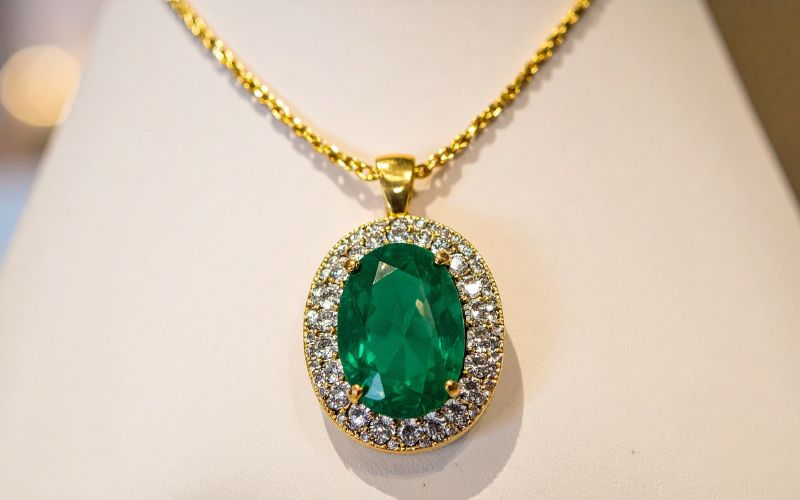
Emerald, commonly called Panna (and referred to as Pachu in some regions), is a precious green gemstone from the Beryl mineral family. Its green color comes from traces of chromium and vanadium. Emeralds are prized for their deep green shades and have been worn for centuries for both beauty and astrological reasons.
In astrology, Emerald is associated with the planet Mercury (Budh) and is believed to support communication, learning, and business success. Many people prefer a Panna stone ring to strengthen Mercury’s influence for studies, trade, or public speaking. Major types of emeralds include Colombia, Zambia, Brazil, and India, with Colombian emeralds often considered the most valuable due to their intense green and desirable clarity. Natural emeralds commonly contain internal inclusions (called “jardins”), which are accepted as part of the stone’s character.
What is Peridot?
Peridot is a semi-precious gemstone from the Olivine mineral family, known for its clear yellow-green to olive-green color. The green shade in Peridot comes from iron in its structure, which gives the stone a bright, warm tone that looks lively even under artificial light; this is why Peridot is sometimes nicknamed the “evening emerald.”
Peridot is linked to mental calm, positivity, and general well-being in many belief systems, and it is a birthstone for August. Common sources of Peridot include Pakistan, Myanmar, the USA, China, and Egypt. Because Peridot is more affordable than emerald and often has very good transparency, it is a popular choice for jewellery.

Emerald vs. Peridot – Understanding Key Differences
Although both Emerald and Peridot share a green appearance, they are very different in terms of their origin, composition, and overall characteristics. Here’s a clear comparison between the two beautiful gemstones:
Origin
- Emerald: Emerald is a member of the Beryl mineral family and forms in hydrothermal veins under high pressure. It is primarily mined in Colombia, Zambia, Brazil, and India, with Colombian Emeralds being considered the most valuable due to their vivid green color and clarity. Zambian Emeralds are slightly darker with a bluish tone, while Brazilian ones are known for their brighter shades.
- Peridot: Peridot, on the other hand, belongs to the Olivine mineral group and has a completely different formation process. It forms deep inside the Earth’s mantle and is sometimes brought to the surface by volcanic activity. Major Peridot sources include Pakistan (Kohistan region), Myanmar, China, the USA (Arizona), and Egypt, which once called Peridot the “gem of the sun.”
Chemical Composition
- Emerald: Chemically, Pachu Stone is a beryllium aluminum silicate (Be₃Al₂Si₆O₁₈), colored mainly by chromium and vanadium. These trace elements give Emerald its signature deep green hue.
- Peridot: Peridot is a magnesium iron silicate (Mg,Fe)₂SiO₄), and the amount of iron in it determines the intensity of its green color more iron means a darker shade, while less gives a light yellow-green tone.
Clarity and Transparency
- Emerald: Natural Emeralds almost always contain inclusions or internal fissures, known as “jardins”, which are considered natural fingerprints of the stone. High-quality Emeralds with fewer inclusions are extremely rare and hence very valuable.
- Peridot: Peridot stones generally have better clarity with minimal inclusions. They tend to be more transparent and brilliant, giving off a glowing, glass-like shine that makes them ideal for light-catching jewellery.
Color and Appearance
- Emerald: Emeralds exhibit a rich green to bluish-green color, which is deep and soothing to the eyes. The tone and saturation determine its value the deeper and more evenly distributed the color, the higher the price.
- Peridot: Peridot usually displays a light, yellowish-green or olive-green color. It has a warm and lively appearance that gives off a cheerful energy. Under artificial light, Peridot continues to sparkle with a golden-green glow, earning it the name “Evening Emerald.”
Hardness on Moh’s Scale
- Emerald: With a hardness of 7.5 to 8, Emerald is relatively durable but can be brittle due to its natural inclusions. It should be cleaned carefully and protected from sharp blows.
- Peridot: Ranging from 6.5 to 7, Peridot is softer and can get scratched easily. It’s best suited for earrings, pendants, or occasional-wear rings rather than daily-wear rings.
Price Comparison (Peridot vs Emerald Price)
- Emerald: The price of Emerald varies widely depending on color intensity, transparency, and origin. High-quality Colombian or Zambian Emeralds can cost several thousand rupees per carat due to their rarity and astrological importance.
- Peridot: Peridot, being a semi-precious stone, is much more affordable. Even high-quality Peridots from Pakistan or Myanmar are available at a fraction of the cost of Emerald. This makes it an excellent alternative for those who prefer green gemstones but are on a budget.
Astrological Significance
- Emerald (Panna stone): Ruled by planet Mercury (Budh), Panna represents wisdom, logic, and communication. The benefits of wearing Emerald stone include improved focus, creativity, and financial growth. It is also believed to strengthen intellect and bring clarity in decision-making.
- Peridot: Although Peridot is also connected with positive mental energy, it is not considered a direct substitute for Emerald in astrology. It is said to bring peace, confidence, and harmony but holds a milder influence compared to Panna.
Emerald vs Peridot: For Jewellery
- Emerald: Known as a symbol of elegance and status, Emeralds are often used in high-end jewellery, engagement rings, and traditional pieces. Many people prefer wearing a Panna stone ring for its royal charm and astrological benefits, as it is believed to strengthen Mercury’s influence. The deep green shade of Emerald pairs beautifully with both gold and platinum settings, making it a timeless choice for luxury jewellery.
- Peridot: Peridot’s bright and youthful color makes it perfect for modern jewellery designs. It complements both silver and gold and is preferred for daily wear due to its cheerful green hue and affordability. Its sparkling clarity gives a fresh look to rings, pendants, and earrings alike.
Peridot or Emerald – Which Gemstone Is Right for You?
Choosing between Emerald and Peridot depends on what you are looking for — astrological power, appearance, or budget. Both stones have their own charm, but they serve different purposes.
If you’re someone who believes in astrology and wants a gemstone to strengthen planet Mercury (Budh), then Emerald (Panna stone) is the right choice. Wearing a Panna stone ring is said to bring clarity in thinking, confidence in speech, and success in communication or business-related fields. It’s especially suitable for those in professions like teaching, law, media, and finance. However, Emeralds can be quite expensive and require extra care due to their natural inclusions.
On the other hand, Peridot is often considered the best substitute of Emerald for those who love the green hue but are looking for a more affordable and durable option. It offers beauty and brightness without the high price tag. Peridot is also known as a positive energy stone, believed to bring happiness, emotional balance, and peace of mind.
If your focus is more on astrological strength and long-term benefits, go for Emerald (Panna). But if you’re looking for a stylish, light-green gemstone with elegance and affordability, Peridot can be a wonderful alternative for both jewellery and general well-being.
FAQ
1. Is peridot stronger than emerald?
No, Peridot is not stronger than Emerald. Emerald ranks 7.5 to 8 on the Moh’s scale of hardness, while Peridot is 6.5 to 7, making Emerald slightly harder and more durable.
2. Can I wear a peridot instead of an emerald?
You can wear Peridot instead of Emerald if you want a more affordable green gemstone, but astrologically, Peridot is not a perfect substitute for Emerald (Panna stone) as it has a milder effect than Mercury.
3. What is more expensive, peridot or emerald?
Emerald is more expensive than Peridot because it is rarer, highly valued for its deep green color, and holds greater astrological importance. Peridot is more affordable and widely available.
4. Which zodiac should wear peridot?
Peridot is best suited for people with the Leo (Singh Rashi) zodiac sign, as it is believed to bring confidence, positivity, and success to those born under this sign.
5. What is the Indian name for peridot?
The Indian name for Peridot is Zabarjad or sometimes referred to as Pitmani in Hindi.
6. Is peridot harder than emerald?
No, Peridot is not harder than Emerald. Emerald has a hardness of 7.5 to 8, while Peridot ranges from 6.5 to 7 on the Moh’s scale.
Conclusion
Both Emerald (Panna stone) and Peridot (Zabarjad) share a beautiful green hue, but they differ greatly in origin, hardness, price, and astrological strength. Emerald, being rarer and more powerful, is ideal for those seeking Mercury’s blessings in communication, intellect, and business growth. Its rich color and royal look also make it a timeless gemstone for fine jewellery, especially in rings and pendants.
Peridot, on the other hand, is perfect for those who love the freshness of green gemstones but prefer something more affordable and easy to maintain. It carries calming and positive energy, making it a wonderful choice for jewellery and emotional balance.
